Report Guide
China Money Flow Report Guide
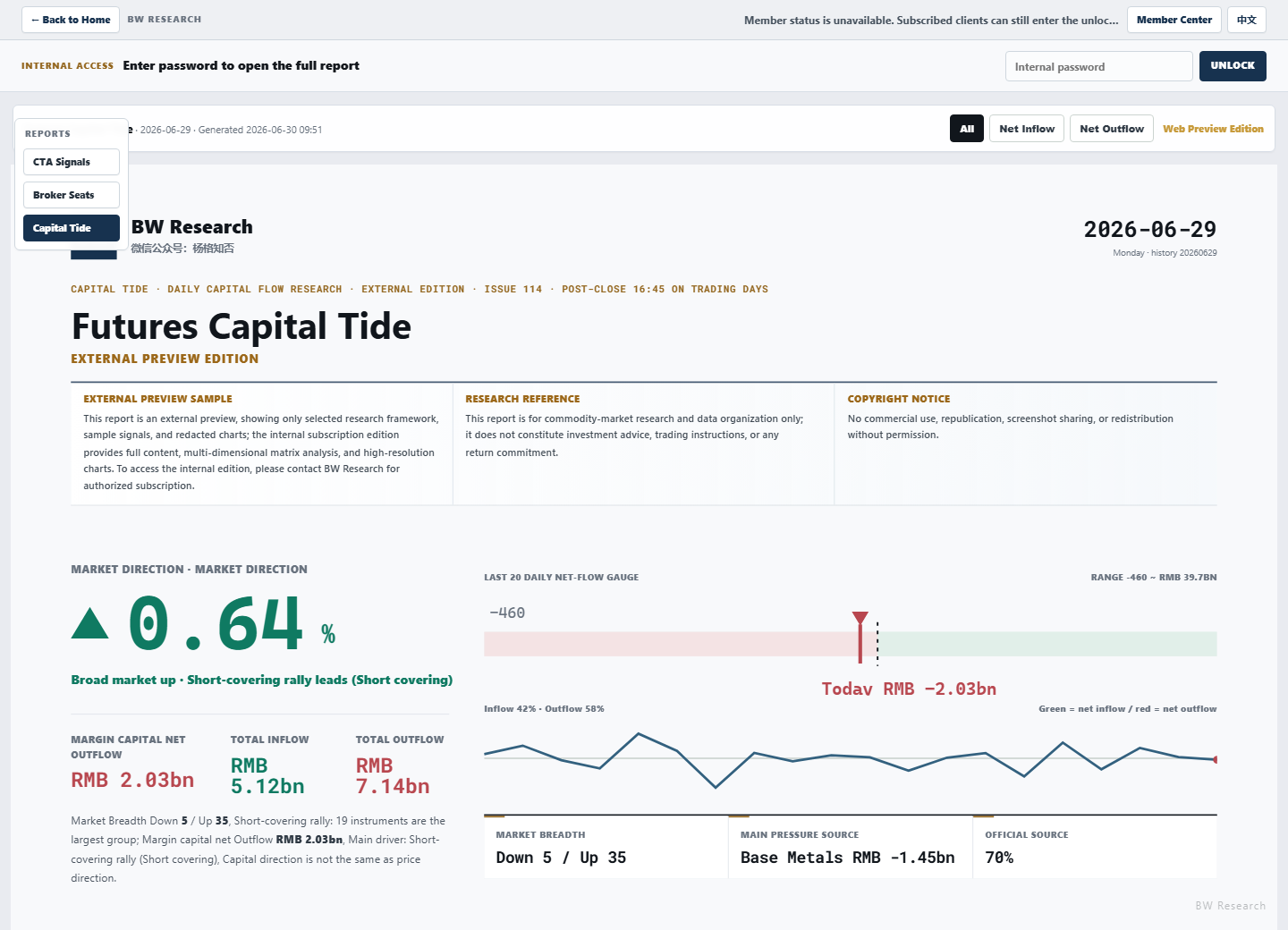
This report shows where market attention is moving. It does not determine price direction by itself; it helps you read heat, crowding and risk background.
01Start With OverviewCheck whether total flow is entering or leaving.
02Read RankingsIdentify the most active products.
03Check SectorsLook for sector-level confirmation.
04Cross-CheckConfirm with trend and positioning reports.
What it answers
The report asks where attention is increasing, which products are attracting capital, where capital is leaving, and whether flows have sector-level confirmation.
Core logic
- Flow direction: concentrated inflow, broad inflow and clear outflow mean different things.
- Open-interest change: flow with position expansion and flow with position reduction should not be read the same way.
- Sector concentration: several related products moving together is more meaningful than one isolated move.
- Crowding risk: persistent inflow can confirm attention but can also create pullback risk.
Suggested reading order
- Start with total inflow and outflow.
- Review top inflow/outflow rankings, especially repeated names.
- Check whether flow forms sector-level concentration.
- Compare price and flow for continuation or pullback risk.
- Cross-check with CTA trend and China Broker Positioning.
How to judge signal quality
- Persistence across sessions.
- Concentration across related products.
- Agreement between flow and price trend.
- Confirmation from positioning structure.
How to combine the three reports
- China Money Flow tells you where the market is paying attention.
- CTA tells you whether attention has become trend.
- China Broker Positioning tells you whether major positioning supports the direction.
- If flow rises without trend or positioning support, it is only heat, not a completed signal.
Common mistake
Capital inflow does not automatically mean price should rise, and outflow does not automatically mean price should fall. Use flow as market-context and crowding information.