Report Guide
China Broker Positioning Guide
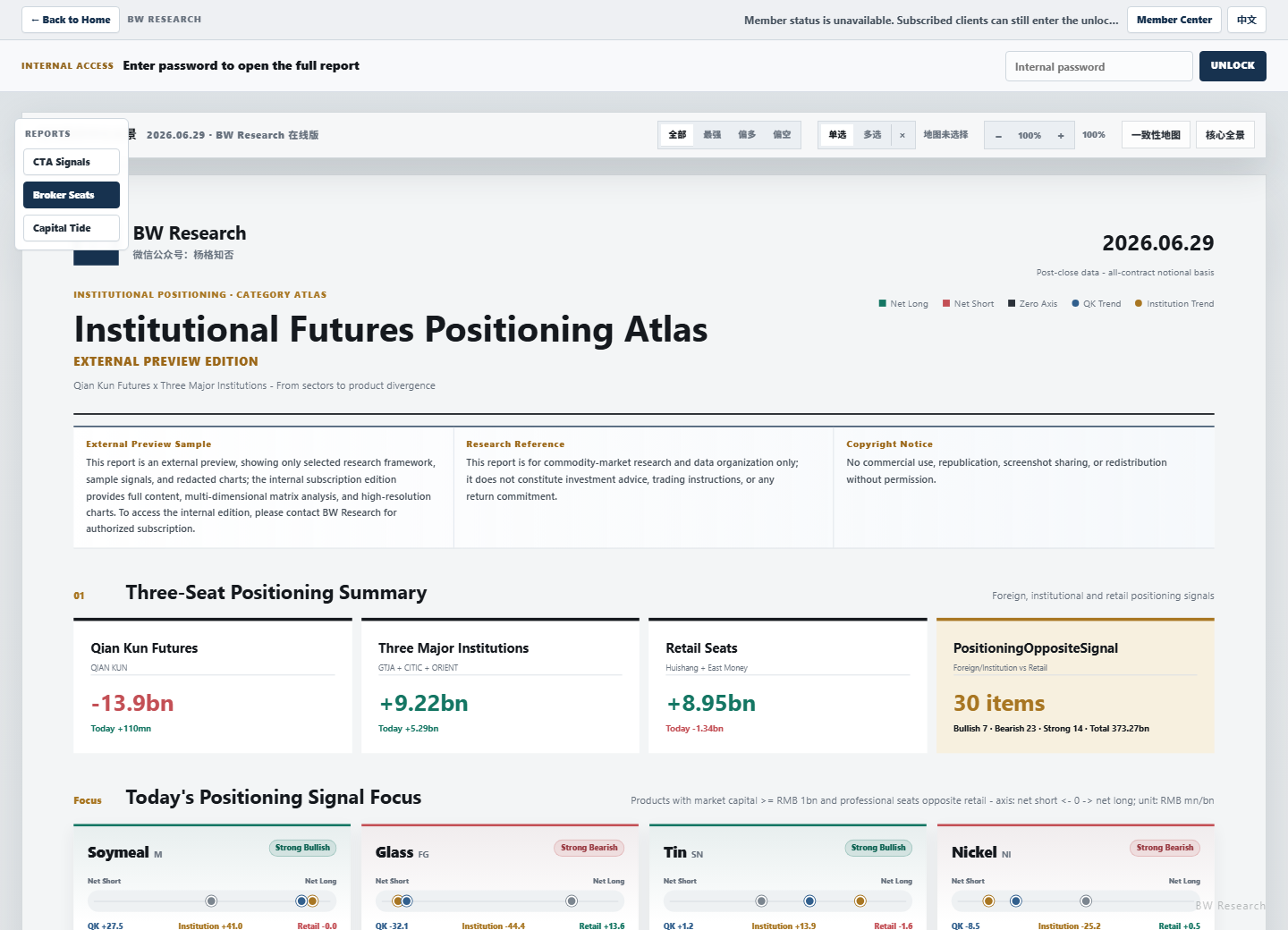
This report helps you understand how different capital groups are positioned. The point is market structure and divergence, not a one-day prediction.
01Start With SummarySee whether long or short positioning is concentrated.
02Watch Key SeatsCheck whether leading institutions change consistently.
03Compare DivergenceCompare institutions, offshore flow and retail seats.
04Review ProductsFind products with the clearest structural shifts.
What it answers
The report asks whether leading capital is leaning long or short, whether institutions and retail are aligned or opposed, and which products show abnormal concentration.
Core logic
- A single seat is not a predictor; combinations and persistence matter more.
- Institutional consensus becomes stronger when several leading seats align.
- Retail divergence often marks a market that needs closer review.
- Price-positioning conflict can point to volatility or reversal risk.
Suggested reading order
- Start with the seat-category summary.
- Check key seats and institutional combinations for multi-day consistency.
- Review whether institutions, offshore flow and retail seats diverge.
- Find products with the clearest structural changes.
- Compare positioning with CTA trend state.
How to judge signal quality
- Persistence over several days.
- Concentration across multiple leading seats.
- Strength of institution-retail divergence.
- Whether price behavior confirms the positioning change.
How to combine the three reports
- CTA tells you whether price trend is smooth.
- China Broker Positioning tells you who may be supporting or resisting the trend.
- China Money Flow tells you whether attention and flow are rising.
- If trend, flow and positioning agree, the signal is more complete; if not, treat it as a divided market.
Common mistake
Do not infer market direction from one seat's one-day position change. Positioning data can lag and may reflect hedging, arbitrage or contract-roll behavior.